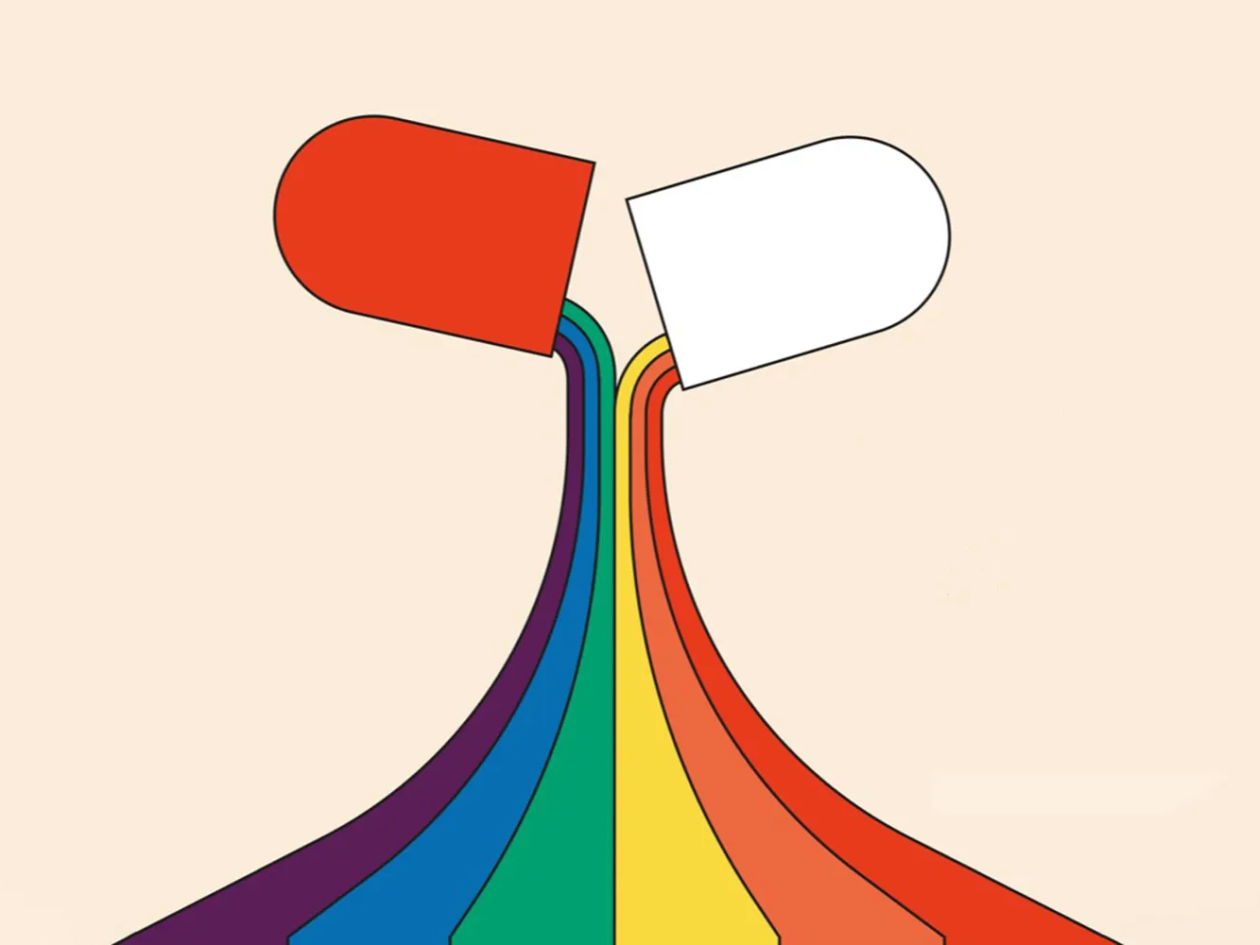
Could a single medication increase your lifespan, improve mental health, ease chronic pain, lower cortisol levels and blood pressure, strengthen your immune system, and improve your ability to understand and manage difficult emotions? It seems rather a bold claim, but a new book, Art Cure by Daisy Fancourt at UCL, looks at evidence from thousands of studies in a decade of research, and sets out exactly how the arts and creativity contribute to our health and wellbeing.
In it, she cites three papers in particular which examine different aspects of health – all of which used Understanding Society data.
Cultural engagement and biomarkers
In a 2024 paper, Daisy, Emma Walker, Meena Kumari, and Anne McMunn used Understanding Society’s biomarker data to look for links between cultural activities and indicators of biological health, such as lower waist circumference and markers of inflammation in the blood.
They found that people who were highly engaged with different arts activities (especially less popular ones such as contemporary and performance art, and dance) had lower blood pressure and pulse rates than those who were less engaged. They were also likely to have a smaller waist circumference and a lower BMI score.
With some of these links, it’s difficult to say whether arts engagement is causing better health, because often the more engaged groups are younger, and greater cultural activity might involve more physical activity. Also, cultural engagement could offer opportunities to establish or build social networks that relieve stress.
Overall, though, even when other factors such as wealth, age, and physical activity are taken into account, if people take part in diverse arts activities, they have lower levels of inflammatory markers. And other studies show that if people increase their engagement, they experience decreases in inflammation over time.
Arts for slower ageing?
Another paper in 2024 (written with Lehané Masebo, Saoirse Finn, Hei Wan Mak, and Feifei Bu) asked whether frequency or diversity of leisure activity could affect biological ageing.
The term ‘biological’ ageing refers to the fact that, as we get older, our life experiences cause different types of wear and tear in our bodies. One of these is DNA methylation, which means that methyl tags (simple molecules of carbon and hydrogen atoms) are attached to particular parts of our DNA, which then can’t be ‘read’. By looking at patterns of methylation, researchers can estimate a person’s biological age and see if it is older or younger than their chronological age. In other words, they can see if people are ageing faster or slower than we would expect.
The research found associations between two health-promoting leisure activities – arts and cultural engagement and physical activity – and slower biological ageing. It was the first study to show a relationship between the arts and ‘epigenetic’ ageing.
They found that when people are engaged in arts activities every week – whether making, doing, watching, visiting, or listening – they age more slowly. Adults who are arts active are biologically around 9.5 months younger than those who never engage. This effect gets stronger as we age – for artsy adults over 40, their biological age is around a year younger. Interestingly, they also found that diversity of engagement appears to be as important as frequency, perhaps because different arts activities provide different experiences, so while there are many common qualities in the therapeutic processes they activate, there can also be specific effects from particular activities.
Deprived areas and arts availability
Finally a paper from 2021 with Hei Wan Mak and Rory Coulter considered the importance of the area people live in, because research has suggested a social and geographical gradient in cultural engagement, in which engagement is higher among people living in more affluent areas.
This research showed that cultural engagement was consistently and positively associated with subsequent life satisfaction and mental health functioning and negatively associated with mental distress. These links were independent of people’s demographic background, socioeconomic characteristics, and the region they lived in.
They also found, though, that the rates of growth in mental health functioning that accompany community cultural engagement are stronger among people living in deprived areas. Also, the rates of decline in mental distress that accompany cultural engagement are more prominent among those living in deprived areas. This suggests that individuals who live in highly deprived areas may benefit the most in terms of improvements to their mental wellbeing from engaging with the arts.
Unfortunately, as the book points out, people in rural areas have fewer opportunities to engage because of proximity and accessibility issues – and the more deprived the area you live in, the less likely you are to go to any live events, largely because there are fewer arts venues in deprived places.
What can be done?
Arts and health are gaining traction in policy agendas worldwide, with WHO, UNESCO and governments embedding creative approaches into health systems, and social prescribing schemes now operating in over 40 countries.
However, the book says governments everywhere could be doing more – and encourages all of us to take its advice on how we can bring the arts into our lives more.
Other evidence in the book, for example, outlines how songs support children’s brain development; how visual arts and music can reduce depression, stress, and pain; how creative hobbies can help our brains to stay resilient against dementia; that dance can build new neural pathways for people with brain injuries; and that going to live events, museums and exhibitions decreases our risk of future loneliness and frailty. Ultimately, as Daisy says: “if the arts were a pill, we would be taking it every single day”.
Authors