Professor Susan Harkness, Understanding Society Topic Champion for Social Policy, has been working with the Cabinet Office in a project looking at what happens to women's jobs when they come back from maternity leave.
How question wording can help surveys more accurately measure change and stability.
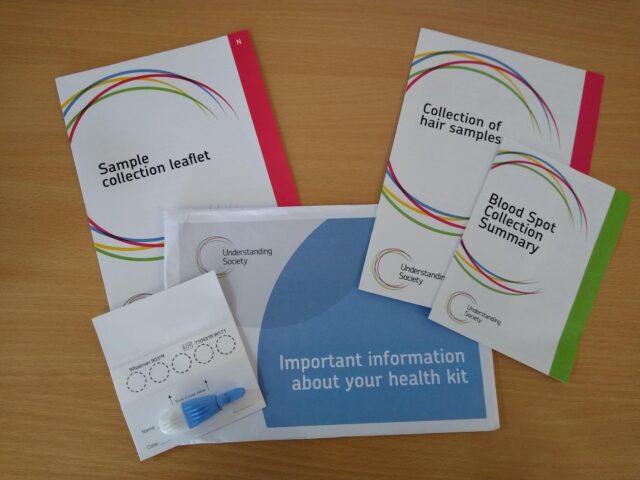
Our participants are involved in the development of new ways to gather health data through an innovative pilot project that aims to find out whether people can collect their own blood and hair samples.
Playing sport, learning to play a musical instrument or joining a drama group give children vital skills and the chance to socialise with different groups of people, but research from the Social Mobility Commission has found that whether children take part in these types of activity is heavily influenced by how much money their family has.
New labour market histories that span the British Household Panel Survey and Understanding Society help researchers track changes in working lives.
Research using Understanding Society shows that our self-rated health is linked to objective measures of our health - and that the link varies according to people's age, gender and social class.
The Children's Society Good Childhood Report finds that young people are becoming less happy over time.
London Plus use Understanding Society to see whether volunteers reflect the diversity of the city.
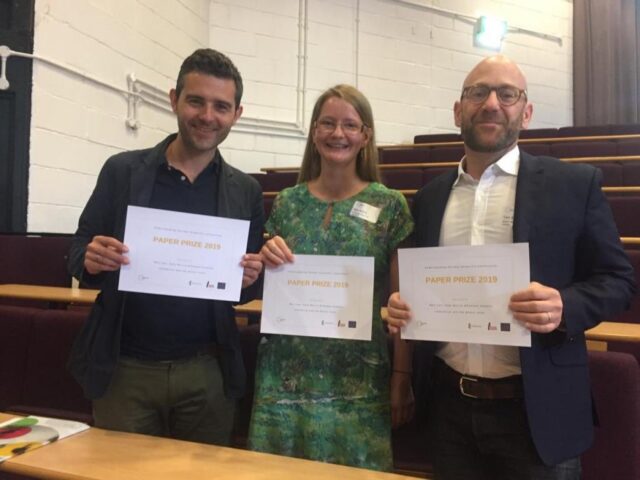
We presented four prizes at the Understanding Society Scientific Conference at the beginning of July
The Understanding Society Innovation Panel is where methodological experiments and new ideas are tested, helping us develop and refine the main Study.
We can already see the gap between boys and girls when they're 15
Simplifying the tracking of partnership changes in Understanding Society and BHPS.
We've developed a new teaching dataset to give students a foundation in using longitudinal data for research.
New research suggests social media use only has small, subtle effects on teenagers’ well-being.
New research has found that a good Ofsted rating can have a surprisingly negative impact on students.
New research shows longer commute times are associated with lower job and leisure time satisfaction.
Which households lose or gain the most under universal credit? And are the effects short-lived or persistent?
New analysis by Public Health England has found that 29% of children live in a household where at least one parent is reporting symptoms of emotional distress.
Taking part in arts and cultural activities or sport makes us happier.
Our study participants help us understand what real people think, experience and feel.
Sign up to our newsletter
Enter your email to receive our newsletter updates.
The Economic and Social Research Council is the primary funder of the study The Study is led by a team at the Institute for Social and Economic Research (ISER) at the University of Essex.