Showing News articles for: Employment View all News
Using data collected from more than 2,000 people aged between 50-75 years old, research has shown that outgoing people have more trouble retiring.
A new study has found that opportunities for UK migrants are highly gendered, with migrant women experiencing lower employment rates after becoming a parent.
People in England’s most deprived neighbourhoods work longer hours than those in the rest of the country but live shorter lives with more years in ill health costing an estimated £29.8bn a year to the economy in lost productivity.
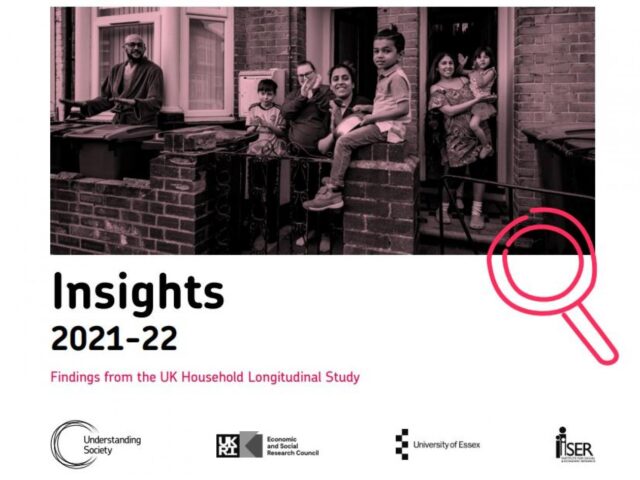
Understanding Society launches 11th annual Insights report, showcasing Covid research.
Submit your abstract to present at our People and Places mini-conference taking place online 4-7 April 2022.
Survey methods specialist, Dr Tarek Al Baghal will be helping to lead the UK Household Longitudinal Study.
24-28 January – join Understanding Society for a week of online policy debates
Men are more sensitive to losing jobs, but moving into poverty has a larger impact on women.
New research shows that unemployment increases the risk of separation and that partnerships are equally affected by men and women's unemployment.
There’s been a huge increase in the number of people working at home during the Covid pandemic and most want to keep doing it ‘at least sometimes’
Research using Understanding Society shows men’s life satisfaction similar whether employed or self-employed.
We're running a busy events programme over the next few months. Book your place to join us for training, discussions, conferences and a data dive.
We're looking for two new researchers to join the Understanding Society team.
Some communities benefit from better social networks
New research using Understanding Society shows unequal mental wellbeing caused by economic consequences of pandemic
The deepest recession on record was in 2020, but the fall in UK employment has been lower compared to previous recessions.
Understanding Society has launched its tenth Insights report, celebrating 10 waves of data
Join Understanding Society for a week of online debates exploring policy in a 'post-Covid' world.
Understanding Society has reached the milestone of 10 waves of data!
Furlough protects wellbeing for people in insecure jobs
Sign up to our newsletter
Enter your email to receive our newsletter updates.
The Economic and Social Research Council is the primary funder of the study The Study is led by a team at the Institute for Social and Economic Research (ISER) at the University of Essex.